

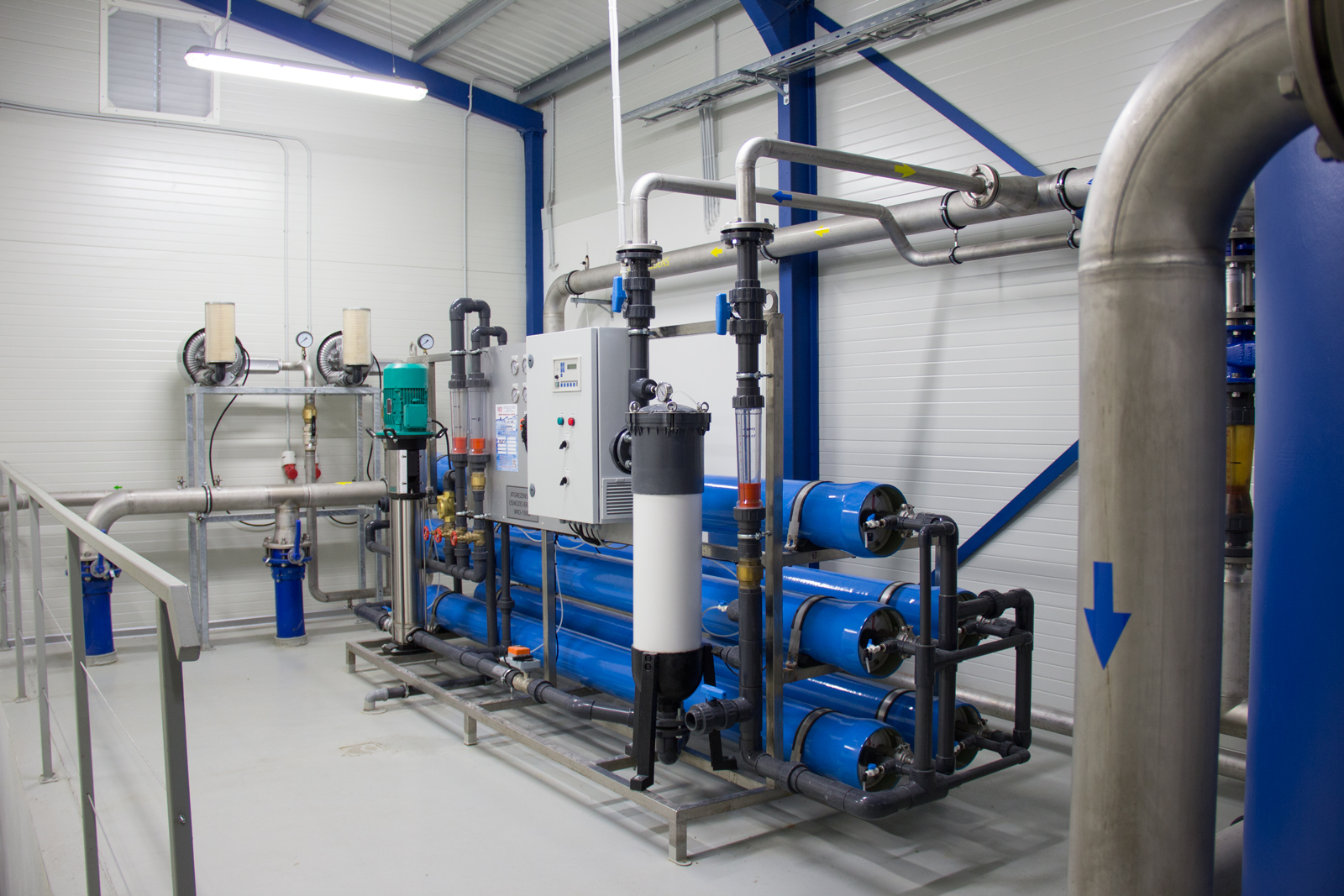


A membrane that can only penetrate solvents but not solutes is generally called an ideal semipermeable membrane. When the solvent and solution (or two solutions with different concentrations) are placed on both sides of the membrane, the pure solvent will naturally pass through the semi-permeable membrane and spontaneously move to the solution (or from a low solution to a high concentration solution) side flow. This phenomenon is called Osmosis. When the osmotic process progresses to the liquid surface of the solution, a pressure is generated to offset the tendency of the solvent to flow in the direction of the solution, that is, equilibrium is reached. This pressure is called the osmotic pressure of the solution.
The osmotic pressure depends on the type, concentration and temperature of the solution, and has nothing to do with the membrane itself. In this case, if an additional pressure greater than the osmotic pressure is applied to the liquid surface of the solution, the solvent will start to flow from the solution to the solvent side opposite to the original permeation direction. This is called reverse osmosis (Reverse Osmosis). ), the separation method of concentrated or purified solution based on this principle is generally called reverse osmosis process.
Reverse osmosis is a kind of reverse migration movement of osmosis. It is mainly driven by pressure and forced to separate the solvent and the solute in the solution with the help of the retention effect of the semipermeable membrane. The higher the solution concentration, the greater the osmotic pressure value. The pressure to be applied in the reverse osmosis process must be far greater than the osmotic pressure of the solution within the allowable range of the system and membrane strength, generally several to several tens of times the osmotic pressure.
When the aqueous salt solution is in contact with the surface of the porous semipermeable membrane, a layer of water molecules is selectively adsorbed on the solution interface of the membrane, and pure water flows out through the capillary action of the membrane under the action of reverse osmosis pressure. And continuously flow out to form an interface pure water layer.


In this system, pneumatic butterfly valves, electric butterfly valves, and manual butterfly valves are usually involved. Since the pump may generate a relatively high pressure when it is started, a high-performance double eccentric butterfly valve (PN25) is generally installed at the outlet of the pump. The material of double eccentric butterfly valve is generally required to be stainless steel 316. In some working conditions, stainless steel 304 can also be used, and PTFE (tetrafluoroethylene rubber) is used for sealing.
In addition, a check valve will be installed between the pump and the electric high-performance double eccentric butterfly valve to prevent the water in the pipeline from flowing back into the pump.